Contact Us
How to Choose the Perfect PORON® Foam (Without Losing Your Mind)
You’ve been there. Fifteen browser tabs open—jumping from a supplier’s PDF spec sheet to an outdated inventory list, to a 3D model that just won’t load. Your cursor is tired, your coffee is cold, and that “ideal foam density” you’re chasing still feels like a ghost. Sound familiar?
It’s time to close the tabs and ask a more important question: How do I actually choose the right PORON® foam for my project?
Whether you’re designing for aerospace, medical devices, or electronics, this guide will walk you through everything you need to know—without the headache.
First Things First: What Is PORON® Foam?
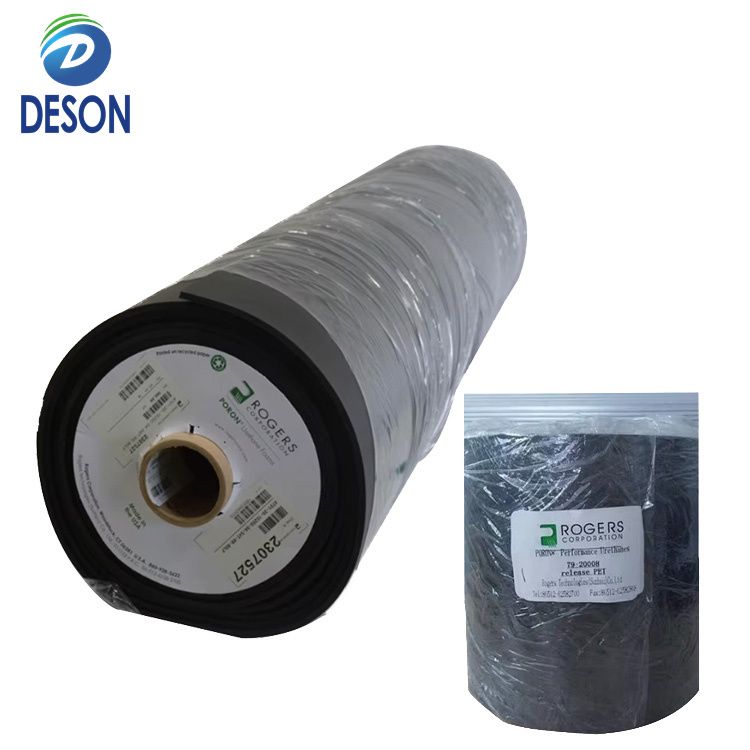
PORON® is a family of microcellular polyurethane materials manufactured by Rogers Corporation. It’s known for two superpowers:
High resistance to compression set (it doesn’t go flat)
Exceptional energy absorption
In fact, PORON® was even used in the Hubble Space Telescope to fill gaps and protect sensitive components. So yeah, it’s trusted by engineers who can’t afford a service call.
 The Science You Actually Care About
To understand why PORON® performs so well, you need to know one thing: it’s an open-cell foam.
Let’s break that down:
Closed-cell foams are like tiny sealed balloons. They feel firm at first, but after repeated squishing, they can burst or lose air—permanently. That’s when your cushion turns into a pancake.
Open-cell foams, like PORON®, are more like micro-springs. Air moves freely through the structure. When compressed, the material supports the load. When released, it springs back—over and over again.
That’s the “physical memory” engineers love. It doesn’t “fart out” (yes, that’s the technical term) after a few thousand cycles.
But Wait—There’s Not Just One PORON®
Here’s the catch: PORON® comes in over 35 patented formulations. Some are designed for high-temperature resistance. Others focus on ultra-low density or flame retardance. So choosing the right one depends entirely on your application.
Ask yourself:
Does this part need to withstand extreme heat or cold?
Will it be visible, or hidden inside an assembly?
Is the priority lightweighting, shock absorption, or acoustic insulation?
For example:
PORON® 92 Series – Great for general industrial gasketing
PORON® XRD® – Extreme impact protection (think football pads or medical padding)
PORON® AquaPro – Water-resistant and fast-drying, perfect for wearable devices
Each formulation is optimized for a specific job. You wouldn’t use a sledgehammer to hang a picture—so don’t grab the first foam you see.
From Specs to Reality: How to Get It Made
Here’s where most engineers get stuck. You’ve picked the material—now how do you turn it into an actual part?
Don’t just call a supplier. Call a converter.
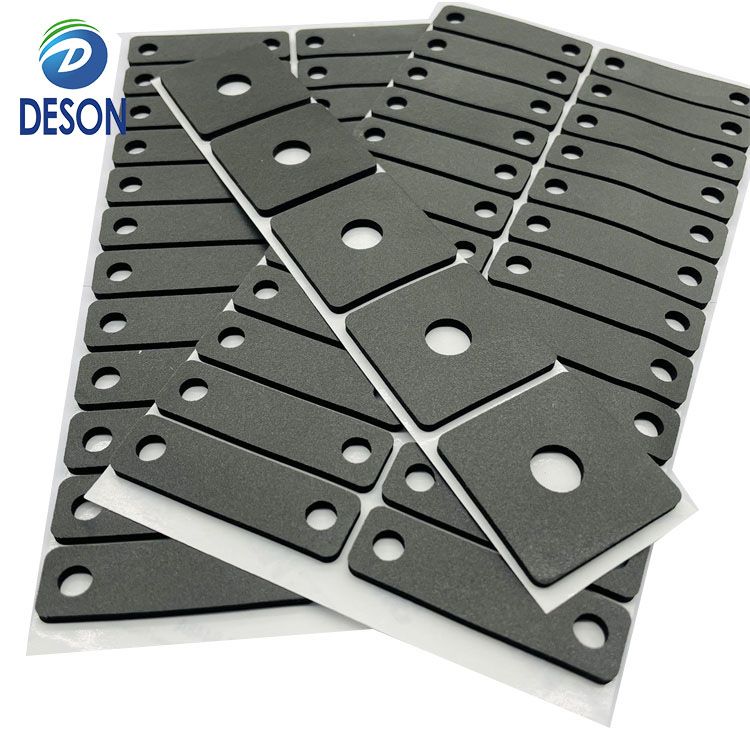
A converter (like us at Deson) takes that raw PORON® material and transforms it into precision-cut components using rotary die cutting, laser cutting, or mold cutting. We help you with:
Tolerances
Adhesive laminations
Prototyping
Scaling from 10 parts to 10,000
PORON® is a high-performance material—but it only performs well if it’s cut and applied correctly.
Want to See for Yourself?
We offer free samples and engineering consultations to help you match the right PORON® formulation to your project. Whether you’re prototyping a medical device or searching for materials for shock absorption inside next-generation electronic components, we’ll help you get from concept to production—without the tab overload.
Final thought: Choosing foam doesn’t have to be painful. Understand the science, match it to the application, and work with someone who knows how to handle it. Your project—and your sanity—will thank you.