
Contact Us
Stuck Between Paint and Metal? Meet the Tape That Ends Your Fastener Nightmares (And Yes, We’ll Help You Choose)
You’re staring at a powder-coated metal part. You need to bond it to something else—maybe glass, maybe a plastic housing, maybe another piece of painted steel.
But here’s the problem:
Liquid adhesives are messy, unpredictable, and take forever to cure.
Screws or spot welds mean drilling holes, risking cracks, corrosion, and ugly finishes.
And somewhere in the back of your mind: “Will this tape even stick to my painted surface?”
Let’s be honest—you can’t be 100% sure any solution will work for your project. We get it. That’s why we’re not here to sell you magic. We’re here to give you the facts about 3M™ VHB™ Tape 5952—and a direct line to people who’ve actually used it on powder-coated metal (spoiler: us, Deson).
What Is 3M 5952? The Short Version
It’s a modified acrylic adhesive on a flexible foam core, with a polyethylene film liner. Translation: strong, conformable, and ready for real-world heat.
Short-term heat resistance: 300°F (149°C)
Long-term (days/weeks): 250°F (121°C)
No melting, no oozing, no sudden failure when your assembly sits near a warm motor or in the summer sun.
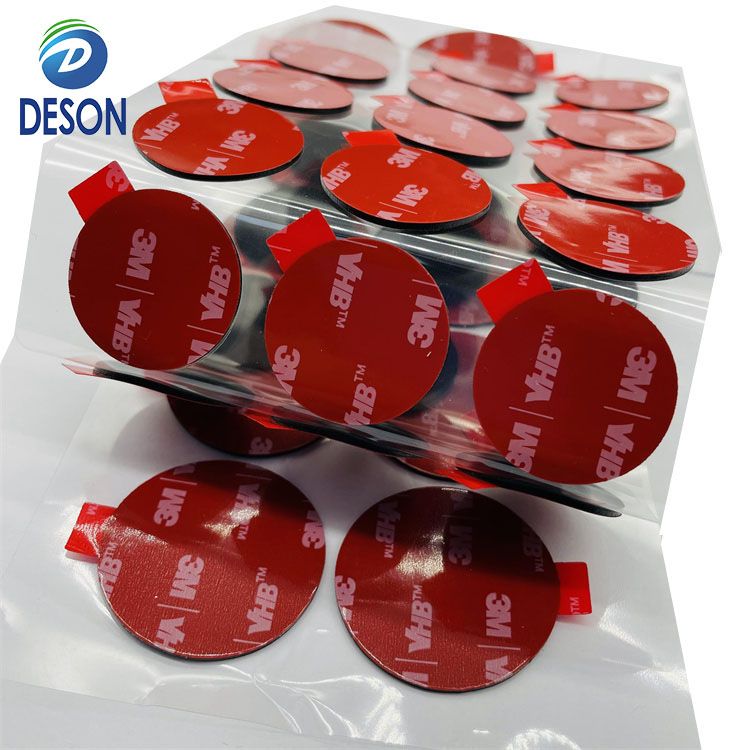
But Wait – What About Its “Twin Brother” 4611?
Great question. 3M 4611 is a beast on bare metal.
3M 5952? It’s specially formulated for painted and powder-coated metal.
If you put 4611 on powder coat, you might get decent adhesion… or you might not. 5952 is the one that knows it’s sticking to paint, not raw steel. Think of them as identical twins with different superpowers: one for bare surfaces, one for finished ones.
What Can You Bond With 5952?
Practically anything you’d find in an industrial assembly:
Powder-coated & painted metals
Plastics (HSE, MSE, LSE – yes, even low-surface-energy types)
Glass, wood, composites
Bare metals like aluminum, steel, stainless, galvanized steel
It’s the universal translator of the bonding world.
Why Ditch the Drill & Liquid Glue?
1. Bond + Seal in One Step
No separate sealant. The foam conforms to contours, keeping out moisture, dust, and corrosion.
2. No More Holes = No More Weakened Parts
Bolts and welds create stress points, distortion, and rust pathways. 5952 spreads the load across the entire joint. You can even use thinner, cheaper metal because you’re not concentrating force at tiny points.
3. Die-Cut Friendly = Production Speed
Engineers love this: pre-cut tape shapes mean instant application. No curing racks, no clamped waiting, no sticky cleanup.
4. No Galvanic Corrosion Nightmares
Dissimilar metals (aluminum + steel) in wet environments? That’s a battery waiting to short your product life. 5952 isolates them electrically.
The Honest Trade-Off: It Costs More Than Liquid Glue
Yes, 3M VHB tape is pricier than a bottle of epoxy. That’s your exit stage left if budget is the only god you worship.
But here’s what you get for that extra cost:
Zero cure time
No measuring, mixing, or spill containment
Consistent bond strength (no “oops, I used too much” surprises)
A finished product that looks like it was designed, not patched together
For most engineers and fabricators, that’s a screaming deal.
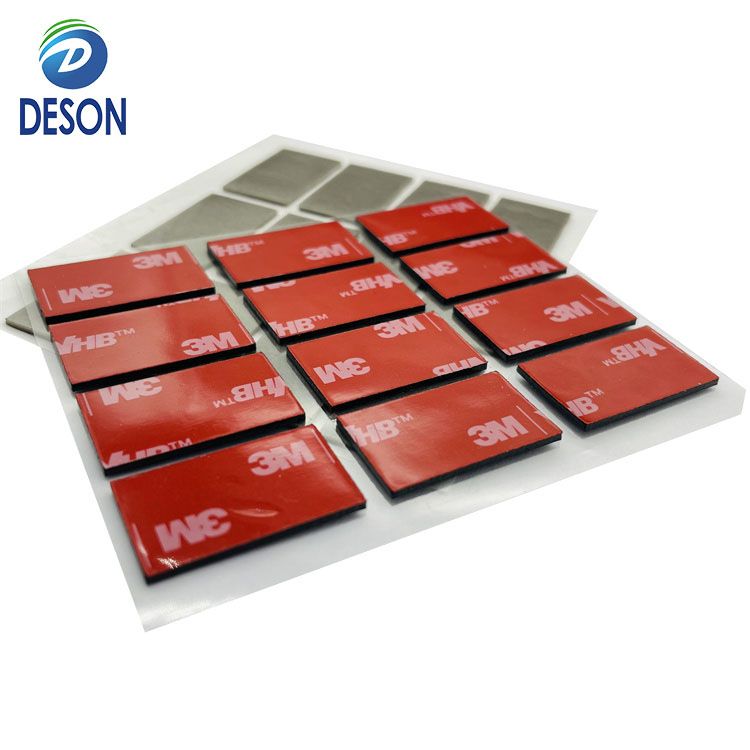
Still Not Sure? That’s Exactly Why We’re Here.
You might be thinking:
“Will it stick to my specific powder-coat supplier’s finish?”
“How does it handle vibration on a forklift panel?”
“Can I get a sample before committing to a roll?”
Just message us. Anytime. We’ll talk through your exact materials, temperatures, and production constraints. No robotic chat scripts—just people who’ve bonded miles of this stuff (and its cousins) at Deson.
We’ll tell you if 5952 is your hero, if you need the 4611 for bare aluminum instead, or if you should run back to your rivet gun (rare, but it happens).
👉 Shoot us a message. We’ll solve your sticky problems—from both sides.
Because the only wrong answer is guessing.