
Contact Us
When a Single Particle Wrecks Your Precision Parts: Why ISO 7 Cleanroom Die-Cutting Matters
Imagine this: a high-precision die-cutting machine is running at full speed, stamping out thousands of tiny adhesive gaskets meant for a cardiac implant. The material is expensive, the tolerances are tight, and the order is urgent. But somewhere in the process, a single microscopic fiber—perhaps from a standard shirt sleeve or the friction of the material itself—settles onto the adhesive layer.
That one invisible particle is now a permanent contaminant. If that gasket fails, a life-saving medical device could malfunction. This is the reality of precision manufacturing. In the world of die-cutting—where we convert materials like medical-grade adhesives, conductive foams, and thermal interface materials—the greatest threat isn’t mechanical failure; it’s the dust, fibers, and static we cannot see.
1. The Problem: Why Standard Manufacturing Isn’t Enough
In standard manufacturing environments, the air is filled with millions of particles: skin flakes, dust, airborne fibers, and even microscopic metal shavings. For a die-cutting facility producing simple foam seals for non-critical applications, this might be acceptable.
However, for critical components used in medical devices (like microfluidic chips or wound care adhesives), flexible printed circuits, or aerospace avionics, contamination is catastrophic. When a rotary die press runs, the friction can generate particulate. The materials themselves (like unsupported adhesives) act as “particle magnets.” If these contaminants aren’t controlled, they cause:
Adhesive Failure: Particles prevent proper bonding.
Electrical Shorts: Conductive debris bridges circuits.
Bioburden Risks: Bacteria or microbes hiding in dust compromise sterility.
To eliminate this risk, the manufacturing environment itself must be controlled to a near-sterile level. This is where Cleanroom Die-Cutting becomes essential.
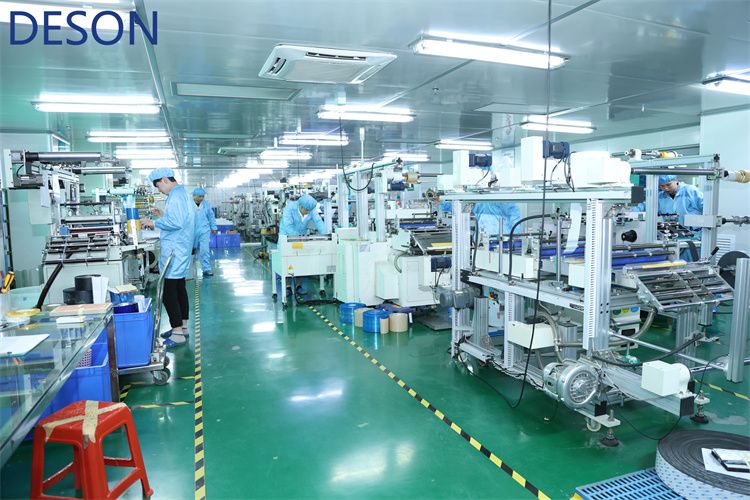
You cannot simply put a die cutter in a white room and call it a cleanroom. Achieving ISO 7 certification requires a holistic system that controls hardware, materials, and humans.
Hardware & Facility
HEPA Filtration: Continuous air flow passing through HEPA filters removes 99.97% of particles.
Air Locks & Pass-Throughs: Materials enter and exit via interlocked pass-through chambers to prevent the “slamming” effect of doors sucking in outside dust.
Static Control: In die-cutting, static electricity is the enemy. We use dissipative flooring, ionizing bars on presses, and conductive tooling to ensure particles aren’t attracted to the materials.
Process & Materials
Material Transfer: Raw stock (rolls of adhesive, foam, or film) is cleaned before entering the cleanroom.
Tooling: Cutting dies must be meticulously cleaned of grease and debris. We use sealed, non-shedding tooling coatings.
Personnel (The Biggest Variable)
Humans are the largest source of contamination. In an ISO 7 die-cutting operation, operators wear full non-woven laundered smocks or coveralls, hoods, gloves, and dedicated cleanroom shoes. We use sticky mats at every entrance to trap wheel and sole particles. Every movement is designed to minimize particle generation.
4. The Application: Where ISO 7 Die-Cutting is Non-Negotiable
Not every project requires a cleanroom, but in high-risk sectors, it is the minimum standard for compliance and safety.
Medical & Healthcare: Components like diagnostic test strips, surgical drape adhesives, and wearable sensor patches must be free of particulate and bioburden. Regulatory bodies like the FDA and ISO 13485 for medical devices often mandate that critical components be manufactured in controlled environments.
Electronics & Display: For smartphone speakers, micro-battery spacers, and OLED display adhesives, a single piece of dust under a microscope can create a “dead pixel” or cause a short circuit.
Aerospace & Defense: Avionics and communication systems rely on adhesives and gaskets that cannot outgas or shed particles in pressurized environments.
If a manufacturer lacks cleanroom capability, they are essentially gambling with your product’s reliability.
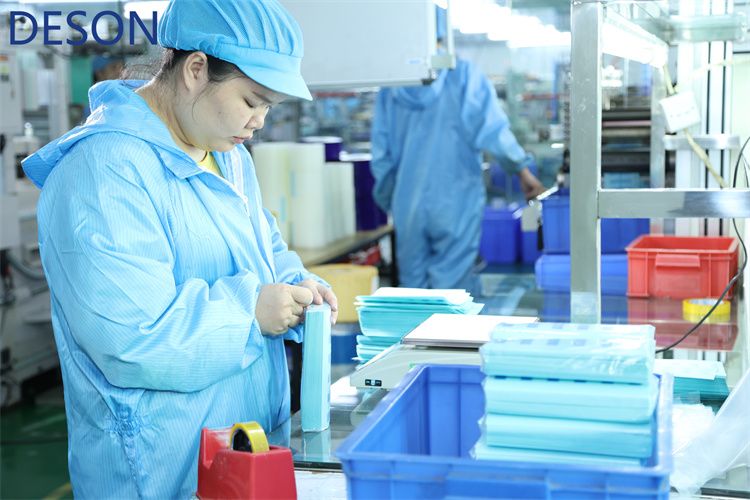
In the medical, automotive, and electronics sectors, compliance is not optional. When you partner with a die-cutting manufacturer, an ISO 7 cleanroom is more than just a certification on the wall; it is a promise of yield protection.
If you source critical components from a facility without ISO 7 controls, you are likely to face:
Higher Field Failure Rates: Contamination issues often appear only after thermal cycling or field use.
Regulatory Audit Failures: During a supplier audit, a lack of environmental control is a red flag that can halt your own production.
Supply Chain Risk: If your product requires sterilization, contaminants trapped under adhesives cannot be sterilized away.
Deson’s Commitment
As experts in precision converting, we understand that your product is only as reliable as the environment it was made in. Our ISO 7 certified cleanroom is equipped with high-speed rotary and precision flatbed die-cutting presses, designed specifically for handling sensitive medical and electronic materials. We combine ISO 14001 standards with rigorous material handling protocols to ensure that every component leaving our facility—whether for a life-saving medical device or a critical aerospace application—is free from the microscopic risks that lead to failure.
When precision matters most, trust the partner who controls the environment, not just the material.